The Green Revolution: Why 2026 is the Year to Go Electric in Rwanda
Introduction
If you’ve driven through Kigali this March, you’ve likely noticed something different. The silent hum of electric vehicles (EVs) is becoming a common sound on our hills. With the Rwandan government’s Vision 2050 strategy in full swing, the transition from petrol to electric is no longer a luxury—it’s a smart financial move. Here is why 2026 is the official "tipping point" for e-mobility in Rwanda.
1. Massive Tax Exemptions (Save Millions)
The financial barriers to owning an EV have officially dropped. As of March 2026, pure electric vehicles valued under $60,000 are exempt from import duties, and the 18% VAT has been waived. For a standard SUV, these incentives can save a buyer over 5,000,000 RWF compared to a traditional petrol model.
2. The 50km Charging Guarantee
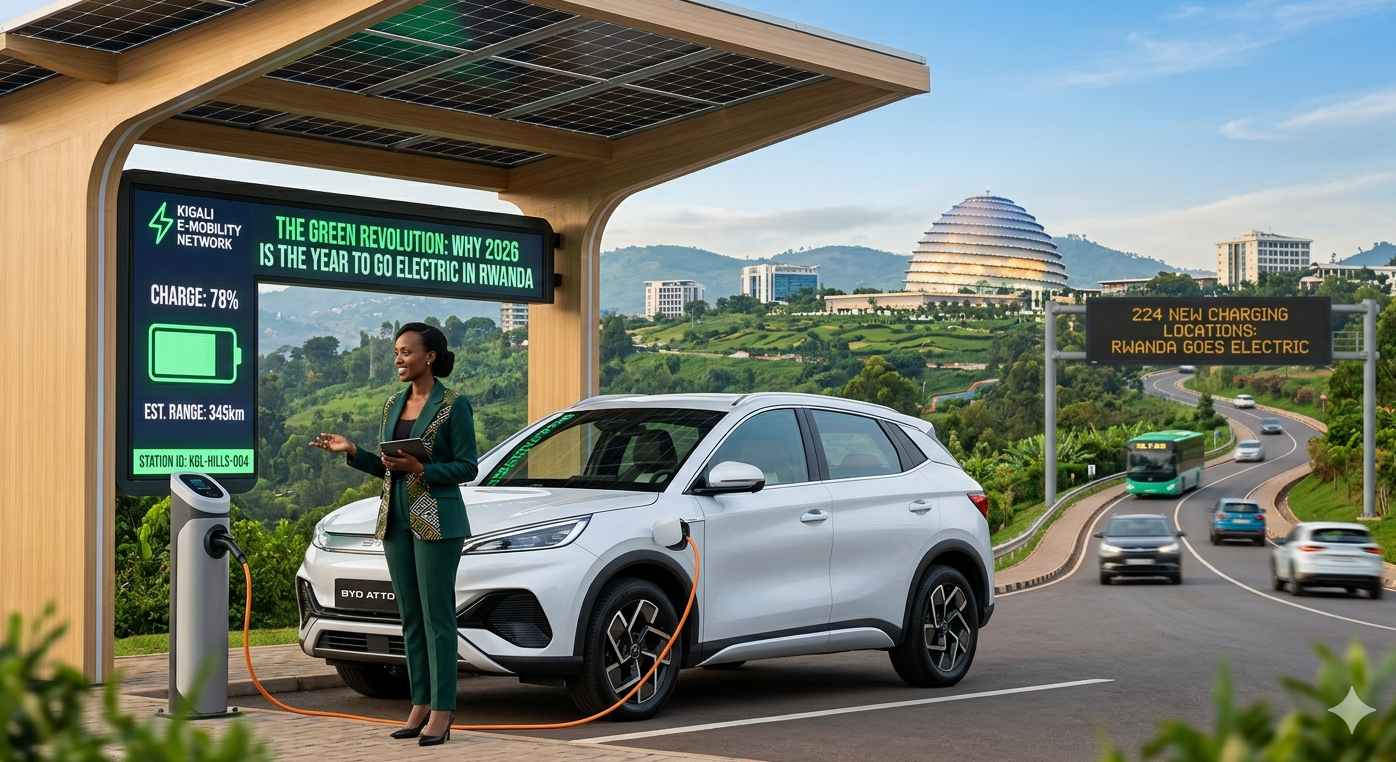
"Range anxiety" is being solved by the Ministry of Infrastructure's new EV Charging Master Plan. The goal is simple: ensure no driver is ever more than 50km away from a charging station. With 224 new locations currently being mapped across the country, a trip from Kigali to Musanze or Rubavu in an EV is now as stress-free as a drive across town.
3. Home Charging: The New Standard
For many Kigali residents, the "petrol station" is now their own garage. Installing a Level 2 Home Charger in 2026 typically costs between 300,000 and 800,000 RWF. Thanks to government subsidies, electricity used for vehicle charging is now billed at a favorable industrial rate, making the "cost per kilometer" significantly lower than fuel.
4. New Models Entering the Market
It’s not just the high-end luxury brands anymore. We are seeing a surge of affordable, feature-rich electric SUVs from brands like BYD, Volkswagen (the e-Golf), and Leapmotor arriving at local showrooms. These vehicles are designed specifically for Rwanda's hilly terrain, offering high torque and regenerative braking that actually "recharges" your battery as you drive downhill.
5. Higher Resale Value for the Future
As Rwanda tightens emissions regulations, the demand for internal combustion engines (ICE) is expected to decline over the next decade. By investing in an EV today, you are securing a vehicle that will be highly sought after in the 2030 used car market. As we discussed in our previous article, a Certified Battery Health Report is the new gold standard for resale.
Conclusion
Rwanda is leading the continent in the race to a green economy. With lower running costs, incredible tax breaks, and a rapidly expanding charging network, the question is no longer "Will I go electric?" but "When?"
Are you ready to make the switch to an EV this year, or are you waiting for more charging stations in your home district? Let us know your thoughts by Liking or Disliking below!

MUSENGIMANA Jacques
NEWI will stick to my Petrol Car. it works just fine
HYBRID TECHNOLOGY RWANDA
NEWSure sure
MUSENGIMANA Jacques
NEWHahaha!
MUSENGIMANA Jacques
NEWNdakubwizukuri
MUSENGIMANA Jacques
NEWEven public buses are going green
HYBRID TECHNOLOGY RWANDA
NEWBYD cars are hitting the market nowadays
@HYBRID TECHNOLOGY RWANDA Abahungu baraziguze mwiyi minsi byo!
MUSENGIMANA Jacques
NEWLet's go green, guys!
HYBRID TECHNOLOGY RWANDA
NEWI like Hybrid not full Electric cars
MUSENGIMANA Jacques
NEWHey Hey Guys
MUSENGIMANA Jacques
NEWIt is inspiring to see how quickly Rwanda is embracing the electric transition in 2026. From the e-motos in Kigali to the new charging stations popping up nationwide, the 'Green Revolution' isn't just a dream anymore—it's our current reality. What's holding you back from making the switch this year? Let’s discuss below!
@MUSENGIMANA Jacques That's Dope!
So Cool
@MUSENGIMANA Jacques, These are just urban cars.